Monstera
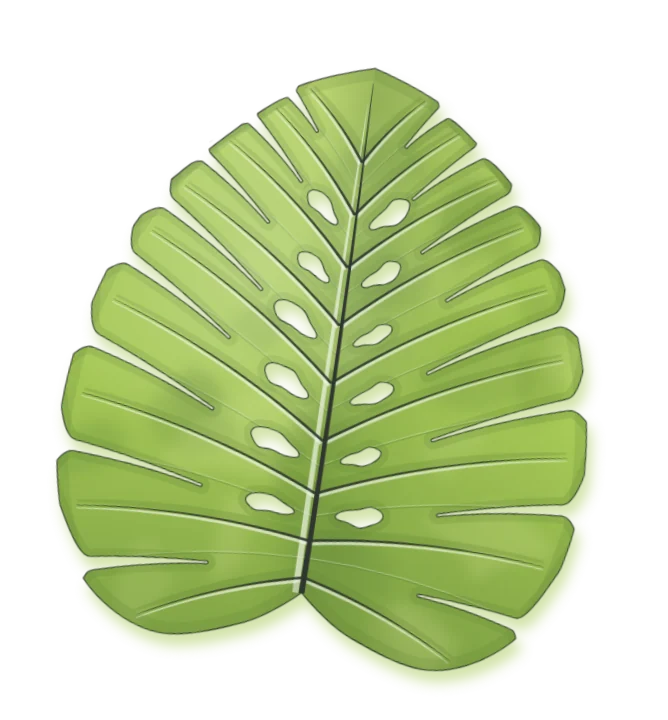
Monstera deliciosaA classic with the typical splits and holes in its leaves, which appear with age and enough light.
I'm interested in this plant
The illustration is indicative; a photo of the actual plant will be added.
Care and growing
Leaves and growth
A climbing plant from the tropical forests of Central America with aerial roots. Young leaves are entire; older ones are leathery, deeply split and perforated. A support such as a moss pole helps it grow larger leaves.
Light
Ideally a bright spot without direct midday sun, which can scorch the leaves. It also grows in partial shade, but more slowly and with smaller leaves with fewer holes.
Watering
Water when the top layer of soil has dried out. Water less in winter. Empty excess water from the saucer.
Humidity and temperature
Normal indoor humidity is enough. Room temperature suits it; it should not stay below 12 °C for long.
Soil
An airy, free-draining mix, for example an aroid mix with bark and perlite, in a pot with a drainage hole.
Propagation
From a stem cutting with at least one node, ideally with an aerial root. A single leaf without a node will not produce a new shoot.
Pets
Contains insoluble calcium oxalate crystals. It is toxic to cats and dogs – keep it out of their reach.
You might also like
 Cutting
 Cutting
 Cutting
 Cutting